

How Fiber Optic Cables Are Powering Africa’s Digital Future
The entire principle of how fiber optic cables run is quite poetic. Very slim fibers of glass, no thicker than a human hair, transmit light across cities, countries, and even underwater. Our world has come to be powered by communication and light signals that are completely unaided and invisible to the human eye.
In Nigeria and across Africa, fiber optics are no longer just technical infrastructure—they are instruments of opportunity, effortlessly converting Africa to a digitally oriented continent.
What Exactly Are Fiber Optic Cables?
Fiber optic cables send data through light, not electric current. Copper wires face issues like weak signals, interference, and limited speed. Fiber offers quick, consistent, and high-volume links, which is what modern digital systems need.
These cables act like highways for data. Copper moves slowly, and fiber moves quickly.
Understanding Fiber Types
Not all fiber is the same.
When people hear “fiber optic,” they often assume it’s a single standard. In reality, there are different categories designed for specific needs, distances, and environments.
1. Single-Mode Fiber (SMF): The Long-Distance Champion
Single-mode fiber is designed for accuracy and long-distance transmission. Because it enables light to move in a straight line, signal loss is decreased, and this makes it suitable for long-distance communication
Specifications such as 20M, 30M, or longer lengths indicate not maximum limits but rather typical deployment lengths for installations.
20M / 30M Single Mode Cables
- Commonly used for short, structured connections within buildings or between nearby network points
- Ideal for offices, campuses, and small-scale ISPs
- Provides future-proof speed even at shorter distances
Despite being capable of spanning kilometers, these shorter variants are widely used in urban setups because they offer the same high performance without needing excessive cable length.
2. Multi-Mode Fiber (MMF): The Short-Distance Workhorse
Multi-mode fiber allows multiple light paths, which makes it more affordable but less efficient over long distances.
You’ll often see:
50M multi-Mode Fiber
- Used in offices, schools, and data centers
- Perfect for connecting routers, switches, and servers within a building
- Cost-effective for organizations that don’t need long-distance transmission
In many Nigerian businesses, especially SMEs, this is the go-to option for internal networking.
Other Key Fiber Categories You Should Know
Besides the types of signals, fiber optic cables are also classified according to the manner and location of their usage.
Indoor Fiber Cables
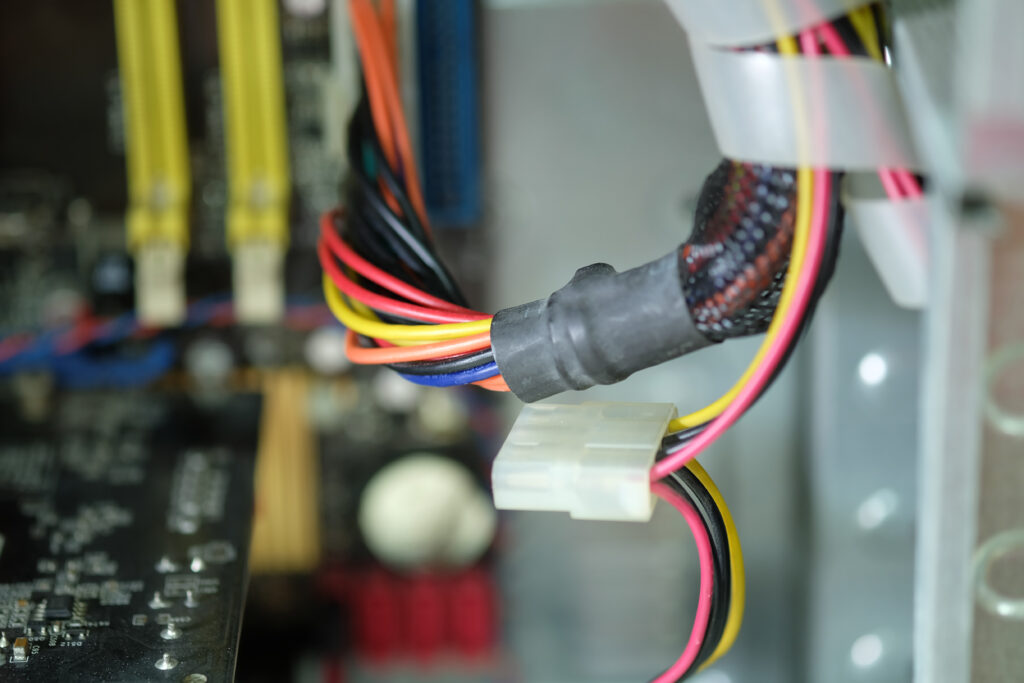
Designed specifically for residences, offices, and commercial buildings. They are light, flexible, and simple to install.
Outdoor Fiber Cables
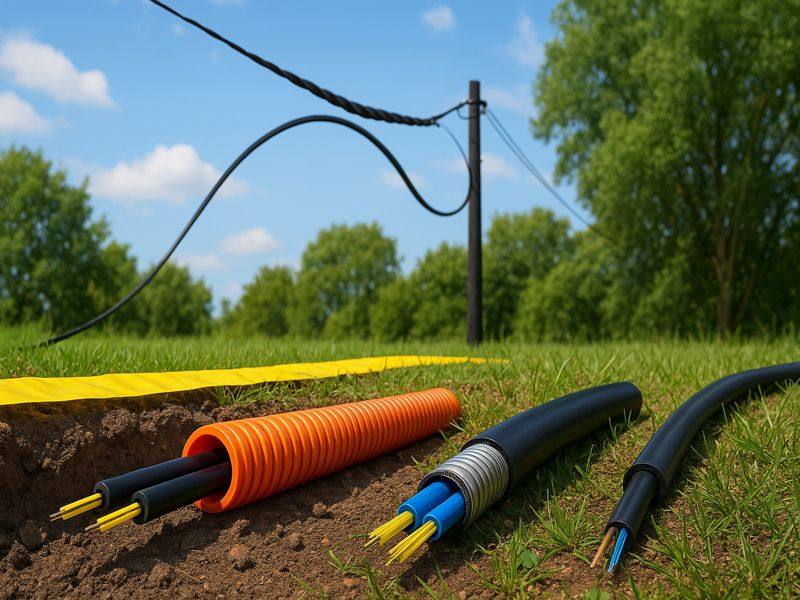
Constructed to endure rough weather like rain, heat, dust, and even flooding. Such cables are the ones you see running along the streets or buried underground.
Armored Fiber Cables
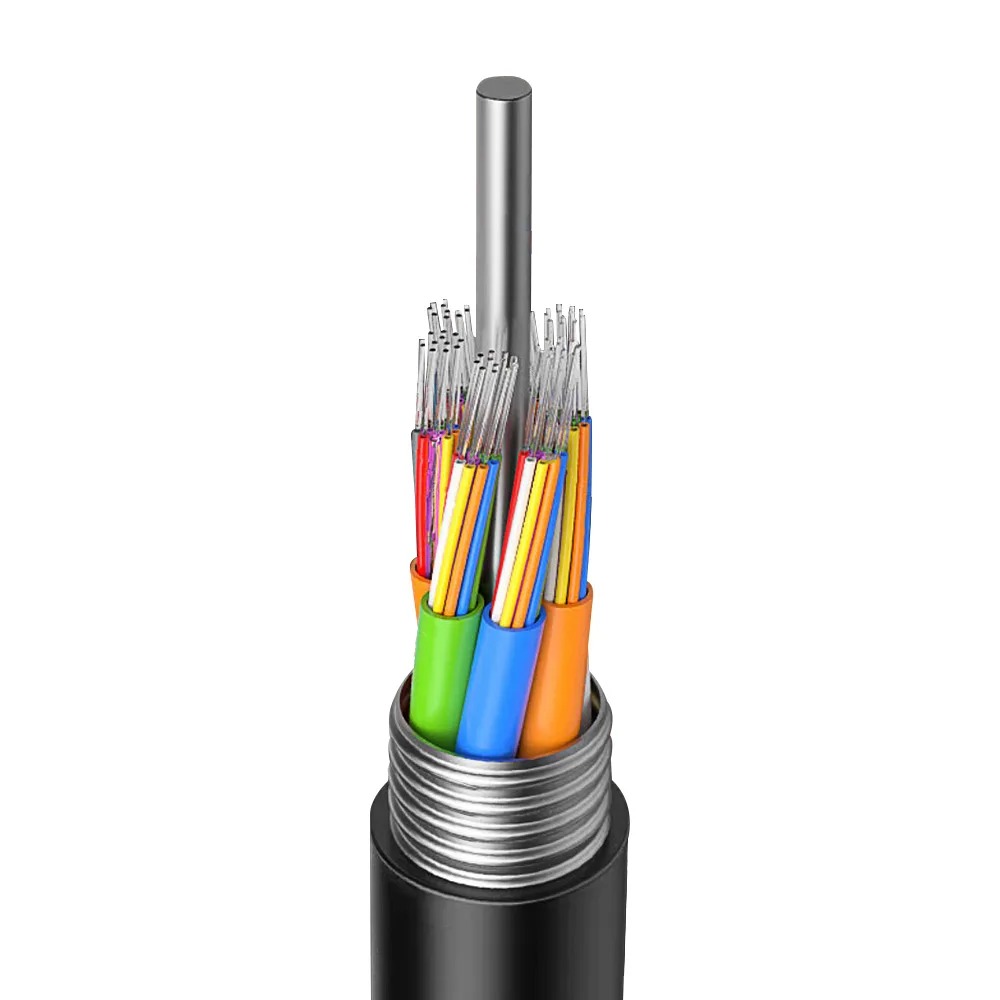
Strengthened with protective layers. They are required in areas where damages to the infrastructure are quite frequent, such as construction zones or roadside installations.
Submarine Cables
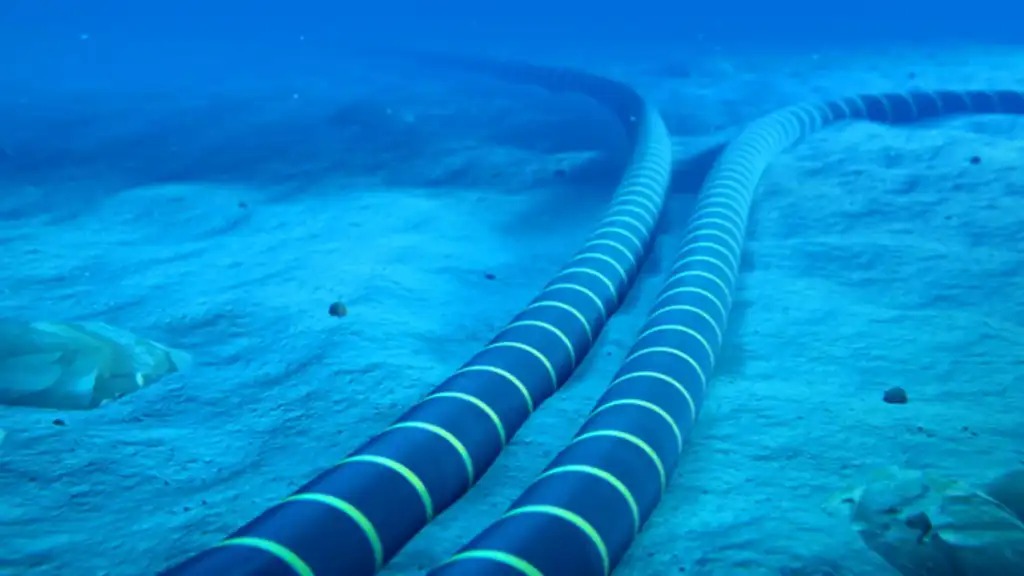
They are the giants in the fiber world. Running under the seas, they link Africa to the rest of the world and enable international internet access.
Who Uses Fiber Optics in Nigeria and Africa?
Fiber optics are not only meant for big telecom companies anymore. The penetration of these companies is growing rapidly in various sectors.
1. Internet Service Providers (ISPs)
ISPs depend on fiber to supply quick broadband to homes and businesses. Without fiber, stable high-speed internet would not be possible at all.
2. Businesses and Startups
From fintech companies to e-commerce platforms, fiber ensures:
- Fast transactions
- Reliable cloud access
- Seamless communication
3. Banks and Financial Institutions
Speed and security are non-negotiable. Fiber enables real-time transactions and secure data transfer.
4. Schools and Universities
E-learning, research, and global collaboration all depend on stable internet—something fiber makes possible.
5. Content Creators and Remote Workers
In cities like Lagos, Abuja, and Nairobi, fiber is powering:
- YouTubers and streamers
- Freelancers working with global clients
- Remote tech teams
Why Fiber Optics Matter So Much in Africa
This is where things get interesting. Africa is one of the fastest-growing digital markets in the world, but it also faces unique infrastructure challenges. Fiber optic cables are helping to bridge that gap.
1. Closing the Digital Divide
A reliable internet connection is still a luxury for many parts of Africa. The expansion of fiber is enabling connectivity in these areas that were previously left out.
2. Enabling Remote Work and Global Opportunities
Thanks to fiber, a developer from Lagos can collaborate with a company in Berlin. Whereas, a writer based in Ibadan can be attending clients in New York.
3. Boosting Local Economies
Better connectivity means:
- More online businesses
- Increased digital payments
- Growth in tech ecosystems
4. Supporting Smart Cities and Innovation
From traffic systems to digital healthcare, fiber is the backbone of emerging smart infrastructure.
Fiber optic cables do more than just carry signals; they support modern communication needs.
A 20-meter single-mode cable might link offices on the same floor. Now, a 50-meter multi-mode line can serve a startup business center. Submarine cables stretch across oceans to connect entire continents.
In Nigeria and across Africa, these networks are still developing. But progress isn’t only about data. The future is not just digital.
It’s fast, it’s connected, and it travels at the speed of light.